

Artificial Intelligence (AI) has been the catalyst for transforming search behavior over the past few years. ChatGPT’s meteoric growth in its first year triggered a seismic shift in the digital landscape so powerful that it led Google to rethink its business model.
The rise of conversational search and its impact on website traffic and click-through rates had businesses question whether traditional search optimization strategies, such as local SEO, are still relevant.
The short answer: Local SEO still matters, in fact, more than ever in 2026 – and for many reasons.
While AI has transformed how users search for information, it has also increased the significance of local SEO. This is because generative AI summaries amplify engagement, influence purchasing behavior, and prompt users to visit brands mentioned in those summaries.
In this article, we’ll explain why local SEO remains a key cog in digital marketing, how it has evolved, and the essential role it plays in getting your brand mentioned in AI-generated search summaries.
What Is Local SEO?
Local SEO is the practice of optimizing your online presence to increase visibility in location-based search results, especially when nearby customers are ready to take action.
For example, if you suddenly need a birthday cake for dinner, you’ll run a local search query that reads, “birthday cake shop near me.” In response, the search engine will display a curated list of nearby cake shops that are located within your proximity.
These results typically appear as a local pack or map listing, featuring essential business information such as address, email address, phone numbers, operating hours, website links, directions, and product photos.
For businesses with physical locations, local SEO is especially powerful. It bridges the gap between online discovery and in-store visits, helping turn nearby searches into paying customers.
Why a Google Business Profile Is Essential For Local SEOEstablishing and optimizing your presence on reputable online directories is a critical component of a successful local SEO strategy. Among these, a Google Business Profile (formerly Google My Business, or GMB) is especially important because it directly influences how your business appears on Google Search and Google Maps. A well-maintained profile – complete with accurate business information – can significantly improve your chances of appearing in local search results and map listings. While Google Business Profile is a major data source for traditional search visibility, generative AI systems, such as ChatGPT and Google Gemini, don’t rely on a single platform. Instead, they aggregate information from multiple sources, including other business directories (Yellow Pages, Foursquare, and Better Business Bureau), websites, reviews, and other forms of structured data across the web. This means that consistency and accuracy across all online listings, and not just Google, are essential for maximizing both search engine visibility and inclusion in AI-generated responses. |
7 Reasons Why Local SEO Still Matters In 2026
Local SEO is often overlooked as an essential component of digital marketing because businesses tend to view growth from a national or global perspective.
The wider the reach, the larger the revenues.
Many businesses overlook the significant traffic generated by local searches, which are often initiated by highly engaged consumers ready to take immediate action.
A user who searches for “best pizza near me” wants to buy pizza NOW.
Local SEO shouldn’t be viewed as an afterthought. It’s a powerful tool that’s been proven as a critical growth driver for businesses that rely on nearby customers to deliver much-needed sales.
Ignoring local SEO is a costly mistake that can lead to lost sales from foregone opportunities, particularly for businesses in competitive industries.
Not convinced?
Here are seven reasons why local SEO still matters in 2026.
1. Local SEO Is Resistant to AI Search
Websites have lower traffic and have experienced zero clickthroughs due to AI search.
AI search produces summaries that include a comprehensive response to the search query, often with citations and brand mentions. All the information a user needs to satisfy their intent is conveniently located at the top of the SERP, preceding the traditional search results.
In comparison, AI search hasn’t negatively impacted local SEO.
A 2025 study by Search Engine Land suggested local SEO might be thriving due to AI search.
Below is Search Engine Land’s chart showing AI search’s effect on website traffic. The purple graph represents impressions, and the blue graph depicts click-through rates. As you can see, as impressions rise, website click-through rates fall.
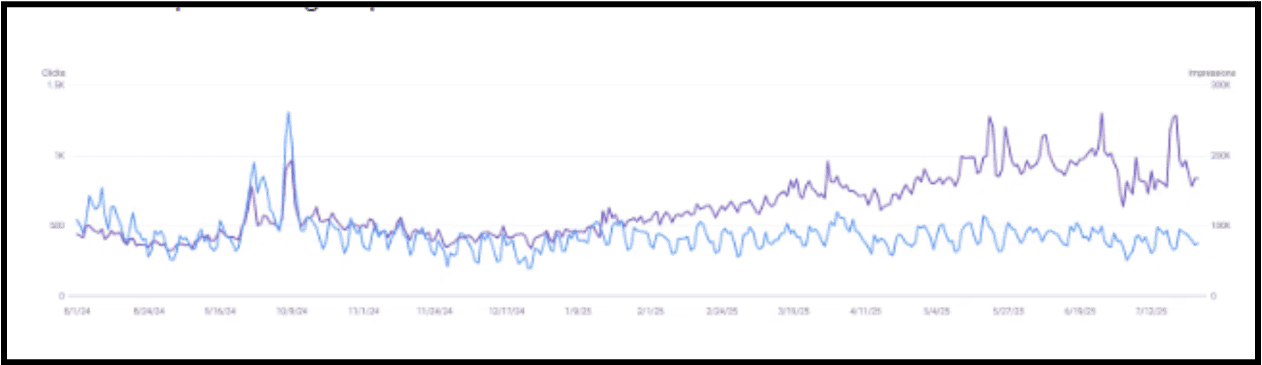
(Source: Search Engine Land)
However, the case is different with local SEO, where clicks are rising or remain unchanged as impressions continue to rise.
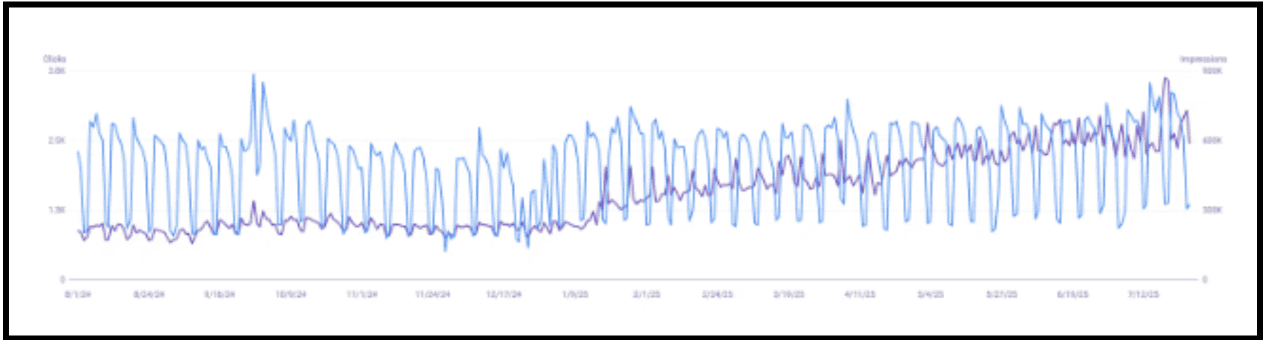
(Source: Search Engine Land)
Why does local SEO respond differently to AI?
- According to SEL’s study, at least for now, generative AI doesn’t have the capability for handling locational awareness unless the user provides more details.
- Another study, this time by Ahrefs, showed that search platforms, such as Google’s AI Overviews, respond to informational searches and rarely to locational searches.
If you do a locational search, “plumber in Denver, Colorado,” Google will present a standard SERP:
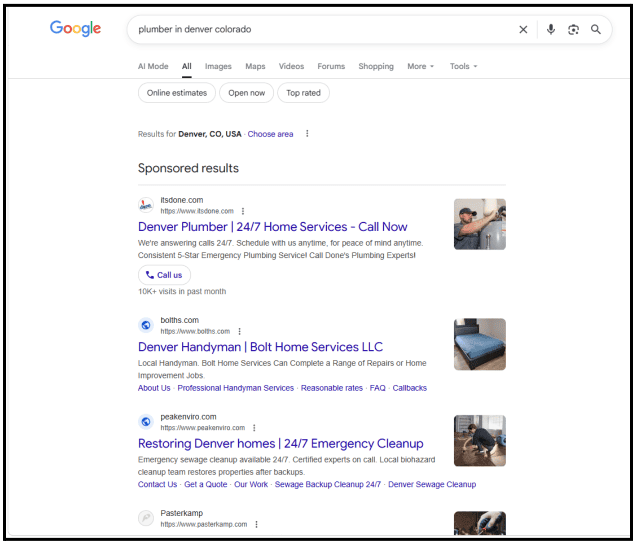
Scroll down, and you’ll find a local search directory:
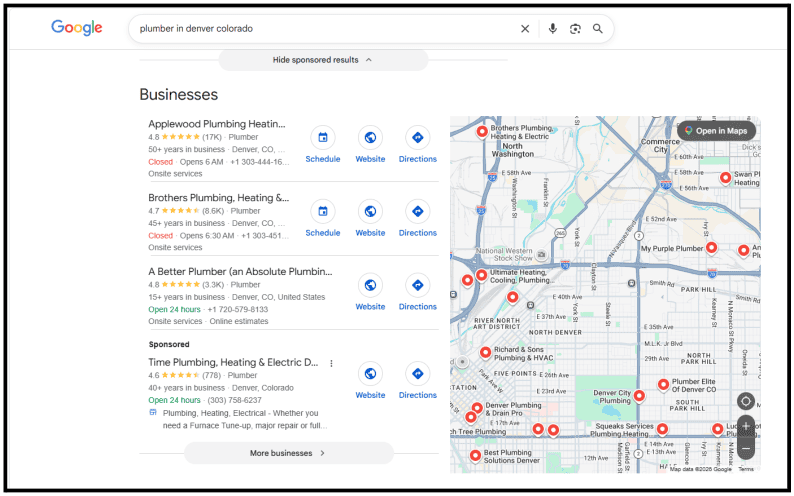
The locational search won’t trigger AI Overviews.
💡Pro Tip: Create a Google Business Profile and make sure that all your business information is complete and up to date. As shown in the image above, the local plumbing service providers have filled out their profiles, including their website URLs.
Local SEO can help drive traffic to your website, even with the rise of AI in search.

2. AI Systems Use Online Directories As Information Sources
Although locational searches don’t always produce AI summaries, AI systems still use online directories to retrieve information.
For example, 48.7% of ChatGPT’s data is sourced from third-party websites such as Yelp, the Better Business Bureau, Foursquare, and TripAdvisor. AI search platforms, including Perplexity, used Yelp as an information source 33% of the time.
In comparison, Google’s AI systems, AI Overviews and Gemini tend to rely on its own services, Google Business Profile and Google Maps, as data sources.
💡Pro Tip: Having a Google Business Profile helps you get found by AI Overviews and Gemini, but you need exposure through other online directories, especially Yelp, to become visible to other AI platforms like ChatGPT and Perplexity.
3. Local SEO Produces Immediate Sales
Here are some interesting statistics about local SEO and consumer behavior:
- 80% of consumers look for local businesses at least once-per-week.
- 46% of all Google searches are for local information.
- 78% of mobile-based local searches result in an offline purchase.
- “Near me” or “close by” searches grew by 900% in the last two years.
- 70% of local searches lead to a store visit.
- 28% of store visits result in a purchase.
A search query like “Plumber in Denver, Colorado” indicates an urgent need.
Users searching for products or services in their local area typically have high purchase intent. They’re not just browsing. They’re ready to act.
When they find a well-optimized online directory listing that clearly presents relevant offerings, accurate details, and strong reviews, they’re far more likely to contact, visit, or make a purchase.
In many cases, your next customer isn’t across the country. They could just be a few blocks away.
A strong local SEO presence ensures your business shows up at the exact moment nearby customers are actively looking.
4. Multiple Channels Lead to Local Search
72% of users prefer Google Search for local searches. Google Search is the leading tool for local searches, followed by Google Maps, which holds 52% of the market share.
However, in 2026, local discovery is no longer confined to Google’s ecosystem. Consumers are using a broad mix of channels to find local businesses, compare options, and make purchasing decisions:
- Social Media: Facebook, Instagram, and Snapchat
- Navigation tools: Apple Maps
- Review platforms: Yelp and TripAdvisor
- Search engines: Bing and DuckDuckGo
- AI assistants and aggregators that summarize recommendations
- Dedicated review sites that offer valuable customer feedback
Today’s users aren’t limited to Google. They can move seamlessly across various channels before deciding on a business to transact with.
This makes a diversified local SEO strategy essential, as it ensures your business is visible wherever or however potential customers are searching.
5. Local SEO Aligns With E-E-A-T
Local SEO doesn’t just improve visibility. It directly supports Google’s E-E-A-T (Experience, Expertise, Authoritativeness, and Trustworthiness) framework by giving you multiple business touchpoints to demonstrate credibility to potential customers.
Here are three statistics that show how much consumers value credibility, trust, and accuracy.
- 62% of consumers don’t transact with local businesses that post inaccurate information online.
- 68% of consumers will patronize a business with a minimum four-star rating.
- 88% of consumers are willing to engage with a business that responds to both positive and negative feedback.
These behaviors align closely with E-E-A-T.
Accurate listings signal trustworthiness, strong ratings reinforce authority, and actively responding to positive and negative comments highlights your experience and expertise in managing customer relationships.
Local SEO creates consistent opportunities to showcase these qualities through updated business profiles, consistently producing high-quality content, earning authentic customer reviews, and welcoming meaningful engagement.
6. Local SEO Supports Voice Search
Voice search refers to the use of spoken queries to interact with digital platforms powered by Automatic Speech Recognition (ASR) technology.
ASR technology converts spoken language into text, enabling users to perform hands-free searches, ask questions, and issue commands.
This technology is now widely integrated across search engines, websites, and mobile applications. Popular voice-enabled platforms include Apple’s Siri, Amazon’s Alexa, and Microsoft’s Cortana, have made voice search a seamless part of everyday digital experiences.
How popular is voice search?
- 20.5% of the global population uses voice search.
- 153.5 million Americans rely on voice search.
- Over 8.4 billion voice assistants are used worldwide.
- 27% of consumers perform voice searches via smartphones.
- 86.5 million Americans use Siri.
The increasing popularity of voice search has made local SEO more important, as 76% of voice searches are “near me” or local searches.
Many users search for local businesses, services, or directions, making it crucial for businesses to enhance their local presence and attract high-intent traffic.
7. Local SEO Enhances SEO + GEO
Enhancing your SEO strategy by incorporating Generative Engine Optimization (GEO) practices allows your business to gain business across traditional search engines and AI-driven platforms.
As search behavior evolves, users are no longer relying on keyword-based queries. They’re asking conversational questions and expecting synthesized, context-rich answers. GEO ensures your content is structured, credible, and authoritative enough to appear in AI-generated responses.
However, a truly effective optimization strategy requires a holistic approach, and local SEO completes the trifecta.
- With local SEO on board, the optimization express, your brand becomes visible to search engines, AI, and local or ‘near me” queries.
- You build trust, authority, and credibility by providing consistent quality content and accurate business information across three channels: search engines, AI, and local search.
- Incorporating local SEO creates another stream of revenue – high-intent traffic from users who are actively searching for nearby products or services.
Local SEO gives your business a clear advantage over competitors who are focused only on SEO and GEO.
Conclusion
As AI continues to reshape how people search and discover information, local SEO has become a decisive factor in whether your business is found, trusted, and ultimately recommended because it has been proven immune to the disruptive impact of AI on traditional search results.
AI has ushered in conversational queries, where users ask “best plumber near me” or “birthday cake shop nearby.” Instead of scrolling through multiple links, users are presented with curated answers from online search directories, such as Google Business Profile or Yelp.
AI prioritizes businesses that are credible, authoritative, and trustworthy. Local SEO enhances these signals through platforms that provide accurate listings, consistent information, highlight positive reviews, and encourage ongoing customer engagement.
Ultimately, local SEO in 2026 is no longer optional. It’s foundational.
Local SEO bridges the gap between your business and AI-driven discovery to ensure that you remain part of the conversation when and where it matters the most:
The moment of intent.
Ready to Dominate Local Search, Traditional Search, and AI Results?If your business isn’t showing up in local searches, landing on page one, or worse, not getting mentioned in AI results, you’re already falling behind. Don’t get left behind as search evolves. Be the business that caters to local needs, and AI recommends. Partner with Mountaintop Web Design and turn your online presence into a powerful, revenue-generating growth engine. Contact us now. |
Frequently Asked Questions (FAQs)
1. Is local SEO still worth it with AI search becoming dominant?
Yes, because local search has been proven immune to the disruptions AI caused to traditional search through declining website traffic and click-through rates. Brand mentions in AI search results cater to the needs of highly-engaged users who are ready to act and transact with nearby businesses.
Also, AI relies on local SEO data, such as reviews, listings, and product images, to generate responses to queries.
2. How do I optimize my business for AI-generated search summaries?
Follow our tips below to optimize your business for AI-generated search summaries:
- Ensure your business listings contain accurate and updated information.
- Focus on acquiring high-quality positive reviews from customers.
- Create consistently high-quality content for your website and social media pages.
What’s the difference between local SEO, traditional SEO, and GEO?
Local SEO focuses on ranking in location-based searches. Traditional SEO utilizes practices that help your business become visible to search engines like Google. GEO is the process of enhancing your brand’s visibility to AI systems, such as ChatGPT, AIO, Gemini, Perplexity, and Claude.