

Leads are the lifeblood of any online business. Without a steady stream of potential customers, even the most attractive website will struggle to grow.
Traditional lead generation methods, such as keyword research, contact forms, and generic marketing campaigns, are slowly being replaced by smarter systems powered by Artificial Intelligence.
OpenAI’s ChatGPT, Google’s AI Overviews (AIO), and Microsoft’s Copilot are transforming how businesses attract, engage, and convert website visitors.
AI tools can perform numerous tasks that save businesses time and money while delivering positive outcomes.
The result is a faster, more efficient lead-generation system that runs 24/7, 365 days a year.
This guide discusses seven ways AI lead generation can grow your online business. We’ve included practical strategies that improve your brand’s visibility to search engines and AI platforms.
What Is AI Lead Generation?
AI lead generation is the process of using AI tools to attract, identify, and convert potential customers into sales.
AI tools analyze large datasets to discover patterns in user behavior, search intent, and content performance.
For example, AI can detect when a visitor spends time on a product page and automatically trigger a chatbot to offer assistance or a discount.
This type of automated process can significantly increase the chances of converting visitors into leads.
What Are The Benefits Of Using AI For Lead Generation?
AI offers online businesses advantages that traditional lead generation methods cannot provide.
1. Increase Productivity and Efficiency
AI tools can perform a multitude of tasks that can expedite processes, increase productivity, and improve efficiency.
For lead generation, these tasks include the following:
- Identify high-quality prospects.
- Rank prospects based on a lead-scoring system.
- The use of chatbots to provide online assistance.
- Create and automatically send personalized emails.
- Find high-demand topics to boost your content strategy.
- Social media prospecting to find potential customers.
- Gather valuable data for your CRM.
- Ad optimization to increase engagement.
- Guide leads through the sales funnel.
We’ll discuss how these tasks help generate more leads for your website as we go through this article.
2. Accurate Audience Targeting
AI analyzes search trends, demographics, and browsing patterns to identify ideal customer segments to target.
There’s no guesswork. Use data-backed analysis to make decisions and plan campaigns that target prospects with the highest potential of becoming paying customers.
With AI, businesses can align their marketing budgets to fund activities that produce quantifiable results.
3. Improve Conversion Rates
AI is an excellent collaborator!
For example, ChatGPT can analyze your content and recommend ways to optimize headlines and calls-to-action (CTA) or enhance the impact of your landing pages and email campaigns.
You’ll be surprised, but small changes can lead to big wins for your business.
4. 24/7 Performance
Occasionally, AI technology might experience technical issues.
For the most part, AI systems are reliable.
They don’t miss work due to illness, non-work-related issues, observe holidays, or take annual vacations.
AI doesn’t need sleep, but you do.
Go to bed every night knowing AI chatbots and generative technology are attending to your website visitors from around the world.
How AI Lead Generation Can Grow Your Online Business
In the pre-AI days, we generated leads using methods that would be called “old school” or “Old Guard (OG)” today.
These OG methods included the following:
- Offline Marketing: Print ads, flyers, brochures, direct mail campaigns, and in-store promotions.
- Early SEO and Content Marketing: Google Keyword Planner, blogging, content distribution, contact forms, newsletter signups, and free downloads.
- Social Media Marketing: Posting content, replying to comments, sending direct messages, paid ads, and linking clicks to landing pages.
- Email Marketing: Newsletters, promotions, surveys, product launches, and educational content.
- Word-of-Mouth/Referral marketing: Loyalty programs, customer referral incentives, and strategic partnerships with non-competing brands.
Many of these methods, such as SEO, content marketing, and email/social media marketing, remain valuable and are still used in digital marketing.
The difference is that these methods have been enhanced by AI technology.
The speed, scale, and efficiency of AI have significantly accelerated lead generation and improved audience targeting.
Let’s start with the cornerstone of lead generation.
Step 1: Keyword Research
Keywords are the words and phrases that allow search engines to find and index web pages with content relevant to the user’s query.
The OG way of conducting keyword research was to use Google Keyword Planner. We would set the search parameters, enter a few search terms, and Google Keyword Planner would generate a spreadsheet listing keywords by search volume and competition.
Today, you have access to high-powered AI keyword research tools that can do more than find high-demand keywords:
- Identify trending topics
- User Intent analysis
- Search competition analysis
- Measure keyword difficulty scoring
- Content optimization
- Competitor keyword tracking
- Traffic volume analysis
Ahrefs, Semrush, Surfer SEO, SEO.ai, and Moz Keyword Explorer are excellent AI-powered keyword research tools that can perform these functions.
💡Pro Tip: AI tools can help you identify the right keywords to target, increasing the likelihood that your content will rank well in search results and appear in AI-generated summaries.
Step 2: Find High-Performing Content Topics
Content remains king in the age of AI. It’s the most powerful driver of organic traffic and leads.
However, for content to be effective, the topic must generate interest.
According to Ahrefs, if your content marketing strategy is not yielding positive results, the culprit may be a lack of interest in the topics you are writing about.
To appear in Google search results and AI-generated summaries, the topic must have the two qualities:
- Responds to user intent.
- Solves a problem.
Keyword research can help you identify high-demand content topics.
- Select five high-volume keywords and run Google searches for each.
- Click the first five web pages that appear in the SERP.
- Analyze the following aspects: headers, writing style, length, use of images, and the subtopics discussed.
Organize the potential topics in a spreadsheet and categorize them by subject matter or user intent.
You can also use AI tools such as AnswerThePublic, Musely, Hootsuite, and Quillbot to recommend content topic ideas.
To learn more about finding the right content topics, read our article “How to Find Content Topics That Will Enhance AI and Google Visibility.”
💡Bonus Tip: Use the AI tool to extract keywords from the five top-ranking web pages.
Incorporating high competition keywords can increase your chances of appearing in AI and Google searches because they are popular with users, build topical authority, and align content with industry leaders.
The best way to utilize high-competition keywords is to combine them with medium, low- competition, and long-tail keywords.
A balanced keyword strategy reduces the risks of high-competition keywords while helping you establish authority for long-term rankings.

Step 3: Optimize Content For Google and AI
SEO isn’t enough. You must also optimize content for AI.
Generative Engine Optimization (GEO) is the process for optimizing content for AI search.
You don’t have to overhaul your current SEO strategy to incorporate basic GEO practices.
- Structure content with clear headings: H1, H2, and H3.
- Use keywords naturally. Don’t force them into the content just to comply with the search algorithm.
- Focus on providing users with comprehensive content. The subtopics must be relevant to the search query.
- Answer the query immediately.
- Organize information by using bullet points or arranging them in numerical order.
- Add an FAQ section.
- Link information to credible sources.
- Link information to relevant pages on your website.
Think of incorporating GEO as a way of upgrading your SEO strategy.
💡Pro Tip: Ensure that your website is optimized for search engines and AI. Your website must be mobile responsive, fast, navigable, and feature high-quality content that addresses the user’s query.
Use high-ranking keywords to optimize tags, images, and descriptions.
Step 4: Chatbots to Capture Leads
Chatbots are software applications designed to engage users in conversations that resemble human interaction, helping to interpret questions and provide relevant responses.
Think of the salesperson who approaches while you’re browsing for shoes.
“Can I help you?”
A skilled, well-trained salesperson can answer all your questions. You’ll be so impressed that you’ll end up buying a pair of shoes!
Chatbots function like a skilled, well-trained salesperson on your website or social media page.
What can chatbots do for you?
- Answer user queries about your business, products, and services.
- Recommend products.
- Provide users with a step-by-step guide for filing complaints.
- Collect customer information such as names, email addresses, mobile numbers, and addresses.
They are effective AI tools for lead generation because they interact with users in real time.
💡Pro Tip: Include a chatbot on your website and social media pages. They are indispensable for customer support services. Chatbots can guide users along the sales funnel.
You can embed the Messenger code on select web pages to link your website with the social media’s chat service.
Step 5: Automate Email Marketing
Email marketing has been proven to be one of the most effective methods for generating leads. A study by the technology company Litmus found that email marketing yields an ROI of $36 for every dollar spent, which is higher than social media or Pay-Per-Click (PPC) ads.
AI tools such as Mailchimp, Klaviyo, and HubSpot can enhance lead generation by automating the following processes:
- Email list segmentation: Organize subscribers into segments or categories.
- Email workflows or sequences: Automatically send out emails based on specific triggers. Examples include a welcome email when someone subscribes or a cart abandonment email if a shopper doesn’t complete the transaction at the checkout counter.
- Send time optimization: AI sends out emails at the time a subscriber opens them.
- Email personalization: Emails are addressed to each subscriber by name.
- A/B Testing: AI runs tests on various parts of the email – subject lines, images, and CTAs – to determine which version delivers the best results.
Automating email marketing generates higher open rates, better audience targeting, more repeat customers, and less manual work.
Step 6: Use AI Analytics
AI analytics improves lead generation by identifying the right audience and predicting the most likely buyers.
Instead of guessing who might become a customer, AI analyzes large datasets to determine the patterns that indicate purchase intent.
Here’s how AI analytics work:
- Lead Scoring: AI analyzes behavior, demographics, and past interactions to identify which users are most likely to become paying customers.
- Predict buyer intent: AI analyzes historical data and behavioral patterns to predict when a user is close to making a purchase.
- Audience targeting: AI uses customer data to create look-alike audiences to test the effectiveness of ad campaigns.
- Optimize campaign performance: AI analyzes campaign data and provides recommendations to improve performance, including the best time to send emails, the most effective headlines to increase open rates, and the best platforms for lead generation.
User behavior changes without warning. Continuous optimization results in better lead generation over time.
2 Common Mistakes To Avoid When Harnessing AI-Powered Lead Generation
It’s become cliché, but Uncle Ben Parker’s advice to Peter Parker is relevant to AI:
“With great power comes great responsibility.”
AI can make work and life so easy. However, power can be abused. When it comes to AI, use its power strategically.
Here are two common mistakes to avoid when using AI:
1. Over-reliance on AI
We asked ChatGPT:
“Is AI technology perfect?”
Here’s ChatGPT’s answer:
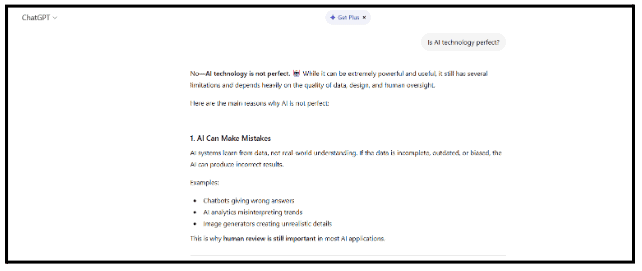
If you need a reminder, ChatGPT has a disclaimer at the bottom:

Remember, ChatGPT and other AI tools use Machine Learning (ML) to analyze trillions of data points from various sources.
If the data is flawed, the response will be inaccurate.
2. Using AI to Create Content
It’s tempting to use AI to create content. You accomplish more in less time.
However, AI technology continues to struggle with understanding context. It can erroneously analyze data that might have a historical and cultural context and produce inappropriate responses.
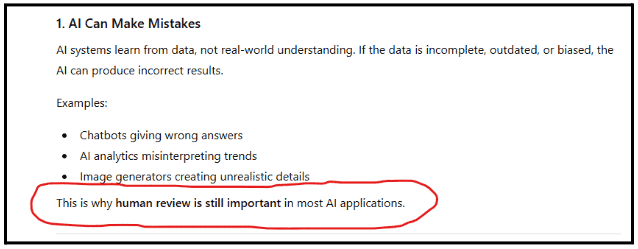
AI is best utilized as a content collaborator.
ChatGPT agrees:
Conclusion
AI is revolutionizing how businesses generate leads online.
From keyword research to utilizing chatbots for customer support to analyzing data to improve audience targeting and conversions, AI makes lead generation faster, smarter, and scalable.
The strategic use of AI technology can enhance your online business by attracting more visitors, effectively engaging users, and converting them into paying customers.
And here’s the thing:
AI is consistently improving its capabilities.
Future AI innovations might include:
- Predictive customer behavior modeling
- Voice and image search lead capture
- Fully automated marketing funnels
Companies that adapt early and combine AI automation with human creativity will gain a competitive advantage and generate the most effective marketing strategies.
How about you?
Are you ready?
We can build a powerful lead-generating website for your business. Attract the right audience, engage users, and convert traffic into revenue.
Contact us today and let’s start building your competitive advantage!
Frequently Asked Questions (FAQs)
1. How does AI improve website conversions?
AI improves user conversions by analyzing user behavior, personalizing website experiences, and automating lead capture through the use of chatbots and marketing funnels.
2. What AI tools can help generate leads?
AI tools that generate leads include chatbots, predictive analytics tools, and marketing automation software.
3. Is AI better than traditional lead generation?
AI lead generation is more efficient than traditional lead generation because it can automate tasks, improve data analysis, and scale processes that help personalize experiences. However, you still need human creativity to offset the flaws of AI technology.