

How much content is published every day? Take a look at the table below:
|
Type of Content: |
Total Volume Published Daily: |
|
Blogs |
6 to 7.5 million |
|
YouTube videos |
Over 720,000 hours |
|
Tweets/X |
500 million plus |
|
Instagram uploads |
95 million plus |
|
WhatsApp messages |
65 million plus |
|
Emails |
350 billion plus |
(Source: Knvey)
We are flooded with content daily.
The Internet has become increasingly crowded. Every day, millions of blog posts, social media updates, video uploads, and marketing messages compete for people’s attention.
Consumers are overwhelmed with information. The natural reaction is to become more selective with the content they consume.
As a result, generic, one-size-fits-all marketing is becoming less effective. Modern consumers expect brands to “KYC” by now. KYC – Know Your Customer. They expect brands to know their needs, preferences, and challenges.
Consumers want relevant recommendations. They demand personalized experiences.
They value content that directly addresses their interests – Personalized Content.
The same can be said for search engines and AI systems.
Google’s search algorithm, its AI platforms, AI Overviews, and Gemini, chatbots such as ChatGPT, and answer engines like Perplexity, no longer simply want to display information. They aim to deliver the most relevant and helpful answers to users.
This is why personalized content has become an essential part of modern marketing.
Whether you’re running an eCommerce store, a B2B company, or a local business, personalized content can help you improve engagement, increase conversions, and foster customer loyalty.
Businesses that continue to publish generic content risk being overlooked by both consumers, search engines, and AI.
In this article, we’ll explain why personalized content matters and how it can help your business grow in the age of search engines and artificial intelligence.
What Is Personalized Content?
Personalized content is content that’s customized or tailored to a specific audience segment or individual user.
Personalization is based on the user’s characteristics, behaviors, preferences, and stage in the customer journey.
Other personalization factors include:
- Demographics – age, profession, and income level
- Geographic location
- Search intent
- Purchase history
- Interests
- Device usage
- Previous interactions with the brand
- Content consumption habits
Here are examples of how brands deliver personalized content:
- A first-time website visitor will be shown introductory blogs.
- A repeat customer will receive product recommendations and exclusive offers.
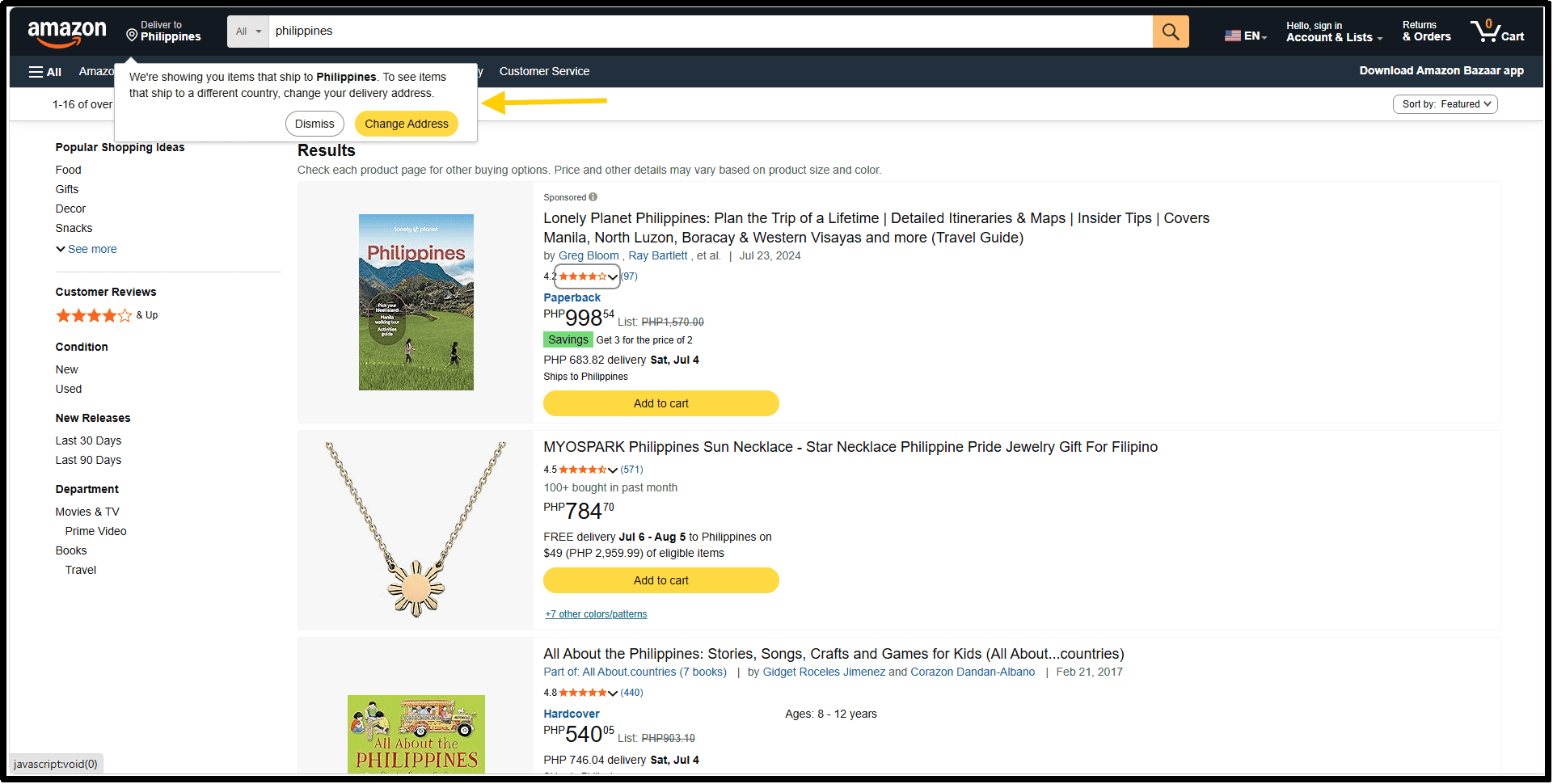
- A customer from another region will receive products and information that are relevant and available to their part of the world.
To further explain the third example, if you’re from the Philippines and visit the Amazon website, Amazon will show you the products it can deliver to the Philippines.
The goal of personalized content is clear.
Deliver the right message to the right person at the right time.
10 Reasons Why You Need Personalized Content
Personalized content significantly contributes to users having an excellent experience on your website. They spend less time searching and more time engaging.
In an era where consumers have countless choices, and AI is reshaping search behavior, personalized content is no longer a competitive advantage.
It’s a necessity.
1. Personalized Content Increases User Engagement
A comic book aficionado would click on content about Marvel and DC.
A foodie would bookmark web pages that provide amazing recipes.
A healthy person in their 50s would voraciously consume articles about longevity, injury prevention, and heart-healthy diets.
People naturally pay more attention to content that feels relevant to their interests.
When visitors encounter articles, products, or recommendations that are aligned with their interests, they are more likely to:
- Spend more time on your website
- Click additional pages
- Read more articles
- Interact with your brand
- Knowingly plan for their next visit to your website
If you’re vegan, would you click on an article about cooking steak the right way? Of course not, and you’d probably be annoyed that the article found its way to your feed or inbox.
Higher engagement sends positive signals to search engines and AI systems that your content is valuable.
2. Improves Conversion Rates
The ultimate goal of content marketing is to turn interested visitors into paying customers.
How can personalized marketing help you achieve this goal?
It comes down to timing.
Where is the visitor in the buying journey?
- A first-time visitor will receive educational/informational content about the company, its products, services, testimonials, reviews, and achievements.
- A returning visitor will receive notifications about new products, discount offers, or invitations to join an exclusive loyalty club.
- Existing customers will receive upsell recommendations or an invitation to a special product launch.
- Visitors who didn’t check out their shopping cart will receive a cart abandonment email.
Personalized content can improve conversion rates by matching content with customer intent and reducing friction in the buying process.
While sending personalized content is a proven approach to improving conversion rates, results take time.
Some consumers prefer to do intensive research before purchasing a product. Others might feel that the product isn’t a priority at the moment.
Just keep working at it!
In time, your patience and resilience will be rewarded.
3. Builds Stronger Customer Relationships
Personalized content has transformed customer service into customer relationships.
Customers want to be understood. They want to be appreciated as more than just a source of revenue.
When your content addresses their pain points, they develop a stronger trust in your brand.
Trust builds emotional connections that encourage repeat purchases, brand loyalty, and referrals. Over time, you’ll establish strong long-term relationships with your customers.
Here’s a key consumer statistic that many businesses ignore:
Independent studies and research from Bain & Company have shown that businesses have a 60% to 70% probability of selling products and services to an existing customer compared to 5% to 20% to a new one.
Moreover, increasing customer retention by 5% can increase profits by 25% to 95%.
The key takeaway is: Take care of your customers, and they’ll take care of you.
Delivering personalized content to existing customers is an effective way to show that you value them as people, not just as revenue sources.
4. Enhances Customer Experience
If you enjoy trying different blends of coffee, doesn’t it feel good when the barista recommends their shop’s latest international roast to you?
Customer experience has become one of the biggest differentiators between brands.
Personalized content is more than just making things easier and convenient for your customers.
You’re creating a fun and exciting experience for them.
- The comic book aficionado would excitedly click the article announcing James Gunn’s choice for the newest Batman.
- The foodie would be happy to read your blog, “How to Plan a Menu for 100 Guests Without Going Broke.”
- The health-conscious customer would be impressed receiving content on “How to Effectively Run 16-hour Intermittent Fasting Without Losing Muscle Mass.”
Other ways to use personalized content to enhance customer experience include:
- Showing location-specific services
- Recommending related blog posts
- Presenting customized offers
- Suggesting products based on purchase history
- Delivering industry-specific resources
When users quickly find what they need, they will remain engaged and continue to interact with your business.
5. Improves SEO by Aligning with E-E-A-T
Keywords and backlinks remain essential to SEO, but their use shouldn’t compromise user experience or fail search intent. Through its Helpful Content System, Google has encouraged content creators to write for people first, not search engines.
Personalized content IS writing for people first because you’re addressing their specific needs. It aligns with Google’s E-E-A-T guidelines for creating high-quality content.
- Experience:Share personal experiences that demonstrate the practical application of suggested solutions.
- Expertise:Use your education and professional experience to articulate theories, technical ideas, studies/research findings, case studies, and concepts into language that your audience can understand.
- Authoritativeness:Validate your brand authority by sharing positive reviews, testimonials, actual results, and third-party citations—secure backlinks from authoritative sources.
- Trustworthiness: Make your visitors feel welcome on your website by assuring them that proper security protocols, such as SSL certificates, antivirus programs, and firewalls, are updated and in place.
Personalized content that follows the E-E-A-T guidelines improves key SEO metrics:
- Lower bounce rates
- Increased dwell time
- Higher click-through rates
- More pages viewed per session
- Improved user engagement
- Greater return visits and repeat traffic
When users are happy, Google is happy, and you’ll be rewarded in the search rankings!
6. Enhances Brand Visibility to AI
A joint study by the Indian School of Business and Carnegie Mellon University showed that Google’s AI Overviews (AIO) has resulted in 54% to 72% zero-click searches.
According to the Pew Research Center, 26% of users terminate their searches on pages that feature an AI-generated summary.
The numbers on the decline of website traffic and clickthrough aren’t really surprising once you think about it.
How many times have you clicked on a link in the SERP and landed on a web page with poorly written content?
Sometimes, the low-quality web page ranks first in the SERP.
In comparison, everything users need – comprehensive information, brand mentions, and citations – can be found in the AI-generated summary.
There’s no need for them to scroll down to the website search results and click on a link that might have thin content.
AI prioritizes content that answers search intent, aligns with E-E-A-T, provides context, and presents information in a well-structured and easy-to-understand manner.
These are the qualities of personalized content.
- A healthcare professional may create different resources for caregivers, nurses, first responders, and patients.
- A software developer may produce separate content for beginners, small businesses, and enterprise customers.
- A fitness coach may write content for people who want to lose weight, build muscle, or improve athletic performance.
Having your brand mentioned in an AI-generated summary can influence buying decisions, lower the risk of zero clickthroughs, and build trust with your audience.
💡Key Takeaway: Personalized Content equates to high-quality content if you put in the time and effort.
7. Guides Customers Through Every Stage of the Buying Journey
Not all customers are ready to make a purchase.
Some are just beginning the research stage. Others are already actively comparing brands to see which one offers the best value.
Each stage of the customer’s buying journey has its unique set of questions and concerns.
Personalized content allows businesses to deliver the right information at the right time, naturally guiding customers along every stage of the buying journey.
Here’s a table of content ideas you can use for each stage:
|
Stage: |
Objective: |
Types of Content: |
|
Awareness |
Educational/Informational |
● Explainer Blogs ● Educational Guides ● How-to Resources ● List-type Articles |
|
Consideration |
Evaluate Options |
● Case Studies ● Product Guides ● Video Demonstrations ● Tutorials ● FAQs |
|
Decision-Making |
Encourage Action |
● Testimonials ● Product Reviews ● Success Stories ● Free Consultations ● Introductory Offers |
💡Pro Tip: The customer journey doesn’t end after a purchase. On the contrary, the journey is just beginning!
Personalized content can help maintain a sustainable, long-lasting relationship with your customer – one that will continue to reap rewards for your business.
8. Improves Email Marketing Performance
Email marketing has the highest ROI of all digital marketing channels.
According to a study by Litmus, for every $1 spent on email marketing, the average return has been measured to be between $10 to $36.
The challenge facing email marketers is that consumers receive hundreds of emails every day. Many of these emails are generic marketing messages that fail to address their interests and are often ignored, deleted, or marked as spam.
Personalized emails can give your email marketing campaigns a boost by delivering content that responds to the subscriber’s needs.
What types of emails can you personalize for subscribers?
- Birthday and anniversary promotions.
- Product recommendations.
- Cart abandonment reminders.
- Re-engagement campaigns for inactive subscribers.
- Personalized newsletters triggered by specific actions.
- Exclusive offers tailored to customer preferences.
- Location-based promotions and event invitations.
The more relevant your emails are, the more likely subscribers will open them.
In an increasingly competitive digital landscape, personalization can transform your email campaign from a mass communication tool into a powerful channel for building strong customer relationships.
10. Personalized Content Gives You A Competitive Advantage
Many companies still rely on generic, one-size-fits-all marketing strategies that fail to address the unique demands of their audience.
It’s like entering a mall and being given a flyer promoting a herbicide that removes weeds. The problem is that you’re staying in a condominium.
What will you do with the flyer? Chances are, you’ll stuff it in the nearest trash can.
With personalized content, you tailor the message to the needs of a specific audience rather than delivering the same message to everyone.
Rather than distributing flyers to everyone, the herbicide company should target its content to the audience residing in subdivisions with homes that have gardens.
Personalized content allows businesses to differentiate themselves by offering:
- Better customer experiences through relevant and timely content.
- More meaningful messaging that addresses specific pain points.
- Faster customer journeys by delivering the right information at the right time.
- Higher engagement across websites, email campaigns, and social media channels.
- Stronger customer relationships built on trust and relevance.
Personalized content is similar to having a meaningful conversation with your customer. They talk, you listen. You identify their problems and provide the best solutions.
4 Best Practices For Creating Personalized Content
Here’s a short list of best practices for creating personalized content that can help yield positive results.
1. Understand Your Audience
Segment your audience and create detailed buyer personas based on the following:
- Age
- Occupation
- Interests
- Goals
- Pain points
- Search behavior
2. Use Customer Data Responsibly
Always prioritize privacy and transparency. Use data to analyze the following:
- Online behavior
- Browsing history
- Purchase history
- User preferences
- Email interactions
3. Focus on Creating High-Quality Content
Personalization will only be effective if users are confident that it is of high quality.
- Provide accurate information.
- Willingly share expertise and personal experience.
- Write in a conversational and easy-to-understand manner.
- Ensure excellent user experience on your website.
- Under-promise, but over-deliver. Provide answers to relevant questions the user might have in mind.
4. Consistently Track Your Progress
If you’ve achieved success, don’t be complacent. If you haven’t achieved success, be patient and keep moving forward.
Either way, track the progress, or lack of it, of your personalized content strategy. People change. Tomorrow’s needs could be different from yesterday’s.
What metrics should you track?
- Engagement rates
- Conversion rates
- Bounce rates
- Click-through rates
- Customer retention
Use the data to refine your strategy.
Conclusion
Personalized content is no longer a luxury reserved for the best-paying or longest-tenured customers. They’re a necessity that, when done properly, delivers consistent results and positive outcomes for businesses.
Consumers expect brands to know who they are. After all, they made the choice to go with your brand over others.
They want to feel appreciated as stakeholders in the value chain. They favor brands that understand their demands, concerns, and pain points and take an extra step to provide solutions through personalized content.
From increasing engagement and conversions to improving SEO and AI visibility, personalized content offers significant advantages that can help businesses grow in an increasingly competitive digital environment.
Companies that embrace personalization today will be better positioned to attract customers, earn trust, and remain competitive in the future.
|
Ready to Create Personalized Content That Converts? At Mountaintop Web Design, we help businesses create and manage SEO and AI-optimized content strategies that connect with the right audience at the right time. From website design and content creation to SEO and Generative Engine Optimization (GEO), our team has proven to be effective in developing personalized digital experiences that drive traffic, build trust, and increase conversions. Contact us today and discover how personalized content can help your business stand out in Google and AI-powered search experiences. |
Frequently Asked Questions (FAQs)
1. What is personalized content in digital marketing?
Personalized content is content tailored to individual users or audience segments based on factors such as demographics, interests, behavior, location, or purchase history.
2. Does personalized content improve SEO?
Yes, personalized content can improve user engagement, increase dwell time, reduce bounce rates, and satisfy search intent, all of which contribute to stronger SEO performance.
3. How does AI help with personalized content?
AI can analyze customer data, identify preferences, automate recommendations, segment audiences, and optimize content delivery to create more relevant experiences.